The Psychology of Successful Premium Branding




Mar 26
If a beautiful logo created premium positioning, Canva users would be dominating luxury markets.
They’re not.
Some brands look expensive…but still can’t command premium prices.
Others look simple—and somehow feel untouchable.
That difference isn’t design.
It’s psychology.
And once you see it, you won’t be able to unsee it.
Today, I’m breaking down what actually separates successful premium branding from brands that just look polished—and why most entrepreneurs are focused on the wrong thing entirely.

Premium Branding Is a Self-Concept Decision
Successful premium branding doesn’t begin with a logo.
It begins with what you believe you are worthy of being perceived as.
That’s the part most people skip.
They assume premium positioning is something you add.
Better fonts, photography, messaging.
But inside my agency, I’ve seen this pattern over and over again.
A woman upgrades her visuals.
She invests in design.
She says she wants to be positioned at a higher level.
And yet—even after we elevate the visuals, even after we refine the messaging—there’s still something we have to address.
Because if she’s still negotiating her worth internally, no copy in the world will fix that.
Inside my agency, we don’t just design brands—we calibrate positioning.
And I can feel immediately when someone wants premium perception…but doesn’t fully feel safe holding it.
It shows up in the way she talks about her experience, in the hesitation around pricing.
It shows up in the subtle desire to soften what should be firm.
Not because she lacks talent.
But because part of her is still asking for permission.
And premium brands don’t ask for permission.
Your Insecurity Leaks Into Your Branding
Your insecurity shows up in subtle disclaimers.
“I know this investment might feel big…”
“I just want to make sure this is a good fit…”
“Of course, I completely understand if this isn’t for you…”
None of those sentences are inherently wrong.
But when they come from imposter syndrome instead of clarity, they weaken your authority.
Premium branding cannot sit on top of unexamined insecurity.
If part of you still feels like you have to earn your place, your brand will communicate that.
High-level buyers are scanning for stability.
They’re asking:
Is this person operating at my level?
Do they feel established?
Do they sound certain?
And certainty cannot be faked with aesthetics.
You Say You Want Premium…But Do You Feel Worthy of It?
Here’s the uncomfortable question.
You say you want to be positioned as premium.
But do you actually believe you deserve to be perceived that way?
Or does that feel arrogant?
Does that feel like you’re overstepping?
Does that feel like you’d be “too much”?
Because if your nervous system tightens at the idea of being seen as elite, your brand will downshift to something safer.
More relatable, humble, approachable.
And approachable is not the same thing as premium.
Most entrepreneurs think premium branding is about elevating visuals.
It’s not.
It’s about confronting insecurity.
I’ve worked with women whose branding looked beautiful—but their internal dialogue was still negotiating worthiness.
And I’ve worked with women whose visuals were simple—but their identity was so stable that buyers leaned in immediately.
The difference wasn’t design.
Premium branding is a self-concept decision.
Before you ask whether your brand looks premium, ask whether you feel safe operating at that level.
Because if the answer is hesitant, your brand will reflect it. And buyers will feel it long before they ever articulate it.
If your brand looks polished—but doesn’t command premium perception—that’s not a design issue.
And positioning is psychological before it’s visual.
Inside a Luxury Brand Audit, we don’t just review your logo or your website.
We identify exactly where your brand is leaking authority, where insecurity is softening your positioning, and where your self-concept hasn’t fully caught up to your ambition.
And if you’re serious about building a premium brand, that’s where you start.
Premium Brands Don’t Seek Approval
Premium branding collapses the moment you start trying to be liked.
That’s where most entrepreneurs get stuck.
They want to sound premium.
But they also want to sound agreeable.
They want to charge more.
But they don’t want to seem arrogant.
They want authority.
But they don’t want anyone to feel uncomfortable.
Those things conflict.
Inside my agency, one of the first shifts we make is removing unnecessary explanation.
Not because explanation is bad.
But because most of it isn’t clarity.
It’s cushioning.
And cushioning comes from insecurity.
Over-Explaining Is a Worthiness Leak
When you over-explain your pricing…
Soften your tone…
Add disclaimers before stating your standards…
You’re not being strategic.
You’re managing perception.
Premium brands don’t manage perception by shrinking.
They manage it by holding certainty.
If part of you is still worried about being perceived as “too much,” your brand will downshift to stay safe.
And safe never feels elite.
If you’re recognizing yourself in this, comment “PREMIUM.”
That’s where the shift begins.
Premium Positioning Assumes Demand
If you market like you need clients, buyers can feel it.
It’s needy, graspy, and desperate. And it spills into your brand.
It spills into urgency language, into over-posting, into constant visibility.
Premium brands don’t behave like they’re scrambling.
They behave like they’re selective.
Inside my agency, I’ve watched clients raise pricing and simultaneously reduce urgency—and their brand immediately felt stronger.
Because authority isn’t loud.
It’s restrained.
Activity Does Not Create Authority
Most entrepreneurs try to earn authority through output.
More content, launches, reminders.
Premium brands reinforce authority through stability.
They don’t chase attention.
They hold position.
If your marketing feels frantic, your positioning isn’t premium yet.
Premium Branding Shifts the Power Dynamic
Premium branding works because it subtly changes who feels chosen.
Are buyers evaluating you?
Or are you persuading them?
If your messaging sounds grateful instead of grounded, you’ve already shifted the power dynamic.
Premium brands don’t beg to be selected.
They present standards.
For our clients, we engineer perception so the brand holds power before a sales call ever happens.
That’s not ego.
That’s positioning.
Power Is Perceived Before It’s Explained
Buyers decide who holds authority before they analyze the details.
It’s tone, confidence.
It’s restraint.
If you don’t feel safe holding that power, your brand will hand it away.
Premium Branding Requires Psychological Capacity
This is the part most people avoid.
You cannot sustain premium positioning if you don’t feel safe being seen at that level.
Fear of judgment, being called arrogant, high-maintenance, or “too much”. Fear of outgrowing people or visibility.
That’s not a branding problem.
That’s an identity problem.
I’ve watched women elevate visually—then shrink their authority because they didn’t actually believe they belonged at that level.
Most people think premium branding is about upgrading assets.
It’s about upgrading capacity and identity.
Your Brand Reveals What You’re Still Negotiating
If you still question your value internally, your brand will communicate hesitation externally.
And high-level buyers don’t move toward hesitation.
They move toward certainty.
Premium branding is psychological before it is visual.
And if that’s uncomfortable, that’s the point.
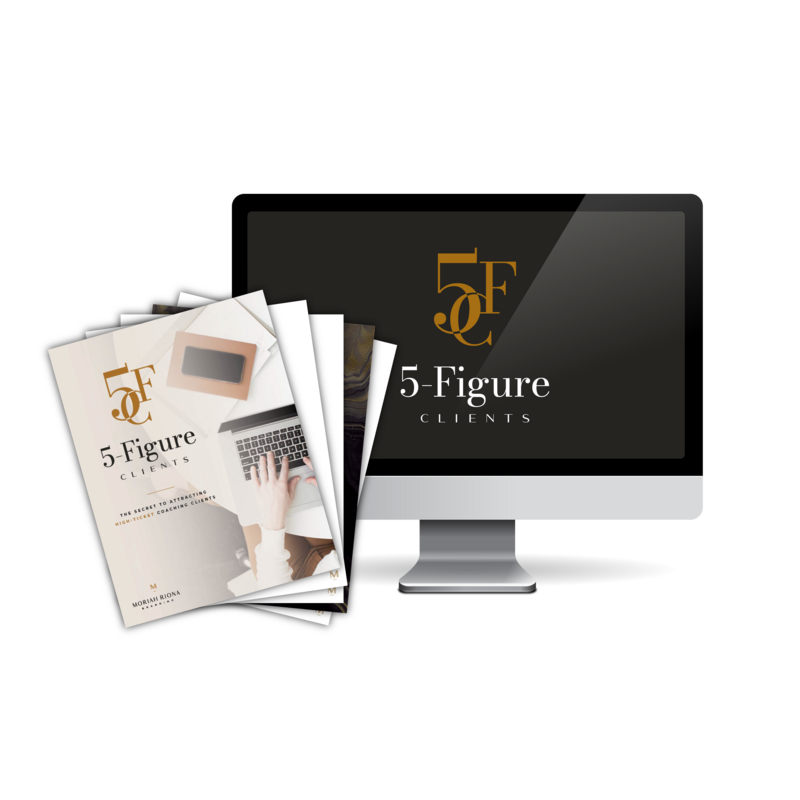
If you want to understand how premium buyers actually think before you redesign anything, my free course 5-Figure Clients is linked.
Because once you understand buyer psychology, you stop guessing.
And premium branding stops feeling abstract.
And if you want to see this psychology in action, read my breakdown of Victoria Beckham’s rebrand—how she repositioned herself from pop-star to “old money” luxury fashion designer.
That’s perception engineering.
And once you see it, you won’t unsee it.
Save for later—Pin This Post!