Why Your “Luxury” Brand Actually Looks Cheap (And How to Fix It)



Mar 19
Did you build your logo in Canva, piece together a template website, and assume that high-ticket buyers would just know you’re worth more?
And now you’re getting desperate enough to discount.
You didn’t build a luxury brand.
You built something that looks more passion project than power move.
And high-ticket buyers can see that from the first click.
That’s why your brand looks cheap.
In this post, I’m exposing the 10 mistakes DIY brands make that quietly sabotage authority.

Mistake 1. You Decorated Instead of Positioned
Luxury branding is not about making something look elevated.
It’s about engineering perception.
DIY brands are built around preference. Colors you like. Fonts that feel “cool.” A layout that feels “clean.”
And that’s decoration.
Decoration is personal.
Luxury positioning is strategic.
In my agency, we don’t start with visuals. We start with positioning. Because high-ticket buyers are not reacting to what you like. They’re reacting to what your brand signals.
Most people say, “If it looks good, it is good.”
But that’s why they keep attracting low to mid-tier buyers who need a lot of convincing.
Luxury brands don’t hope to be taken seriously.
They make it non-negotiable.
DIY brands feel personal.
Luxury brands feel powerful.
If your brand was built around your taste instead of buyer psychology, it will always feel smaller than your pricing.
And that disconnect? That’s where “cheap” begins.
Mistake 2. You Designed Before You Defined the Buyer
Luxury branding is specific.
DIY branding is vague.
If you built your website before clearly defining who you’re speaking to—income level, sophistication level, buying behavior—you skipped the most important step.
High-ticket buyers are scanning for cues.
They’re asking themselves, often subconsciously:
Is this person operating at my level?
Do they understand my world?
Do they feel established?
I have clients come to me all the time who have already worked with a designer.
And listen—most of the time, the site is gorgeous.
Beautiful layout. Elevated fonts. Clean visuals.
But when I ask, “What buyer was this strategically built for?”
There’s silence.
Because there’s a difference between hiring a graphic designer and hiring a luxury branding agency.
A designer executes visuals.
A luxury branding agency engineers perception.
Those are not the same thing.
In my agency, we don’t just design something that looks good.
We build something that speaks directly to a very specific buyer—at a very specific income level—with a very specific expectation of authority.
Because if your brand isn’t calibrated to the psychology of the person writing the check, it doesn’t matter how pretty it is.
And this is where so many ambitious women get confused.
They think, “But I invested. I hired someone.”
Yes.
But was it built for your buyer—or was it built for aesthetics?
There’s a huge difference.
If your messaging is broad, if your visuals are neutral, if your positioning is safe—you will attract cautious buyers.
And cautious buyers negotiate.
They hesitate, need convincing.
They comparison shop.
And even when they do buy, they end up micromanaging everything.
Luxury excludes.
Luxury says, “This is for her. Not everyone.”
If your brand tries to appeal to everyone, it will convert no one at a high level.
And that’s not a design issue.
That’s a positioning issue.
Mistake 3. You Used a Template Meant for Anyone
Templates are built for flexibility.
Luxury brands are built for specificity.
When your website structure looks like hundreds of others in your industry, you don’t look exclusive—you look interchangeable.
And interchangeable brands compete on price.
I can spot a template from seconds on a site.
And trust me—so can high-ticket buyers.
They might not articulate it. They might not even know it. But they feel it.
Luxury branding creates hierarchy. It controls the eye. It guides the experience intentionally.
Templates flatten authority. Everything feels evenly weighted. Nothing feels elevated.
If your brand structure was pre-built for mass use, it cannot communicate exclusivity.
And exclusivity is the backbone of luxury branding.
If you’re realizing you built your brand before you built your positioning, comment “AUDIT” below. I want to see who’s actually self-aware here.
Mistake 4. Your Typography Signals Entry-Level
They communicate power.
Typography creates hierarchy. It sets tone. It signals whether you are boutique, corporate, editorial, legacy—or beginner.
DIY brands choose fonts they “like.”
Luxury brands choose typography that communicates dominance and restraint.
In my agency, typography decisions are never random. They are tied directly to positioning.
Entry-level fonts feel trendy. Overused. Playful.
Luxury typography feels controlled. Deliberate. Quietly confident.
If your font pairings looks like it came from a Canva preset, that perception leaks into how your pricing is received.
And perception always wins.
Mistake 5. Your Messaging Sounds Safe
Premium brands polarize.
Cheap brands hedge.
If your copy says things like:
“I help women live their best life.”
“I’m passionate about helping you thrive.”
“I’m here to support your journey.”
That’s not positioning. That’s filler.
High-ticket buyers are decisive. They want specificity.
Luxury messaging is sharp. It names the problem precisely. It implies expertise without over-explaining.
In my agency, when we refine messaging for clients, the biggest shift is this:
We remove the softness.
Because soft messaging requires persuasion.
And premium brands don’t beg to be understood.
Mistake 6. Your Visuals Don’t Match Your Prices
You cannot charge five figures with three-figure visuals.
You just can’t.
High-ticket buyers experience that dissonance instantly.
If your pricing says premium but your visuals scream entry-level, the brain trusts what it sees.
Not what you say.
This is one of the most common issues I see in Luxury Brand Audits.
Talented women charging high prices—but visually signaling mid-market.
And then wondering why they’re constantly justifying their rates.
If that’s you, this is exactly why I offer a complimentary Luxury Brand Audit.
Inside that call, we identify where your positioning is breaking down—and what needs to shift so your brand finally matches your ambition.
Mistake 7. You Confused Minimal With Luxury
White space is not luxury.
Beige is not luxury.
A serif font is not luxury.
Minimalism without positioning is just… empty space.
Luxury branding is structured.
It has hierarchy. Depth. Intentional restraint.
DIY brands copy the aesthetic of luxury without understanding the architecture behind it.
And without that architecture, minimal becomes bland.
Luxury is not about doing less.
It’s about doing less—strategically.
Mistake 8. You Built It to Impress Other Entrepreneurs
This one stings.
If your brand was built to get compliments from peers, or impress your competition, it will struggle to convert actual buyers.
Other entrepreneurs are not your customer.
High-ticket buyers don’t care that your logo is on-trend.
First, you need to seem established.
Then, you must feel credible.
And ultimately, you have to feel safe to invest in.
Luxury branding prioritizes buyer perception over peer validation.
If your branding decisions were influenced by “what people in my industry are doing,” you diluted your positioning.
And diluted brands never command premium pricing.
Mistake 9. You Have No Proof of Power
Luxury brands show authority.
DIY brands describe intention.
If I land on your site and I can’t see transformation, results, or depth—I assume you’re newer than you are.
Proof builds perceived value instantly.
Case studies. Strategic breakdowns. Authority cues.
In my agency, we never launch a brand without visible proof architecture built into the experience.
Because premium buyers want evidence.
Luxury brands don’t describe their value.
They demonstrate it.
If you’re only telling me you’re powerful, I’m not buying it.
Mistake 10. You Tried to Build a Legacy Brand With Entry-Level Tools
Canva is a tool.
Templates are tools.
But tools do not create positioning.
Systems create positioning. And luxury branding is a system.
It’s psychology. Hierarchy. Messaging. Visual alignment. Buyer calibration.
And you cannot reverse-engineer that by guessing.
Now here’s the myth that keeps brilliant entrepreneurs stuck.
“I’ll invest in my brand once I’m making more.”
No.
You will not make more until you build the brand that justifies more.
High-ticket buyers do not fund your potential.
They invest in perceived certainty.
And perceived certainty is engineered.
Most people think branding is the reward for success.
Luxury branding is the reason for it.
You don’t wait to look established.
You build the brand that makes you undeniable.
Because here’s the truth no one says out loud—
The moment you decide to stop looking like you’re experimenting…
is the moment buyers stop treating you like you are.
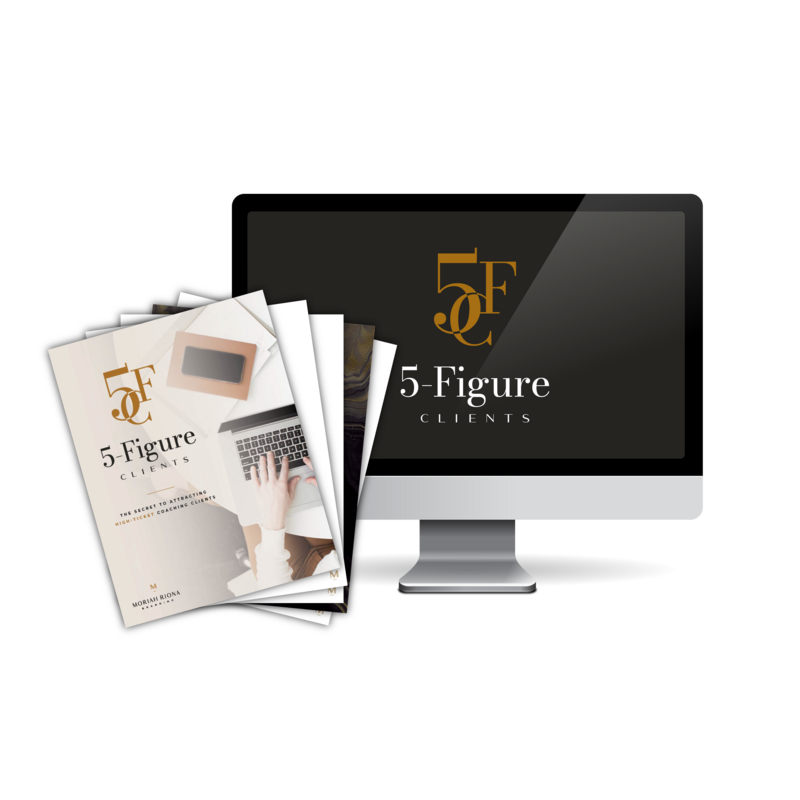
If you want to understand the buyer psychology behind attracting five-figure clients before you touch your website again, I have a complimentary course linked. It walks you through exactly what high-level buyers are looking for before they ever book.
And if you want to see what real strategic luxury branding looks like in action, read this post next.
Because I break down the hidden meaning behind a real luxury logo we designed inside my agency—and once you see it, you’ll never look at branding the same way again.
Save for later—Pin This Post!