How a Luxury Brand Strategy Made 4 Major Launches Inevitable in 12 Months




Mar 16
Most entrepreneurs spend five years trying to write a book, launch a podcast, and build a business that actually feels legitimate.
Meanwhile, my client Kori McClurg launched two businesses, a podcast, and a book in just twelve months.
No burnout or chaotic rebrands.
No scrambling to “figure it out” mid-launch.
Instead, what she had was leverage.
More specifically? She had a luxury brand strategy.
And that, quite frankly, is the difference between slow growth and exponential momentum.
In this post, I’m walking you through exactly how a luxury brand strategy made her year inevitable—and how you can apply the same principles to your own business.

Why Most Entrepreneurs Move Slowly (Even When They’re Talented)
Let’s start with the uncomfortable truth.
Talent is not the bottleneck.
Ideas are not the bottleneck.
Even work ethic isn’t the bottleneck.
What slows most founders down is the absence of a cohesive luxury brand strategy.
Without a clear positioning framework, every new initiative feels like starting from scratch. A new logo here, new website there. A new offer that “kind of” fits.
As a result, momentum fragments.
And when momentum fragments, growth stalls.
By contrast, when your luxury brand strategy is architected properly from the beginning, expansion becomes structured rather than chaotic. Launching stops feeling risky. Decisions become obvious. And most importantly, speed follows clarity.
The Before: When There Is No Luxury Brand Strategy
When Kori first came to me, there was no podcast. There was no book. There was no acquisition plan.
At the time, her concept was called KOR Performance.
The idea wasn’t wrong. However, it wasn’t scalable.
Like many entrepreneurs in the wellness space, she was juggling multiple ideas: performance, nutrition, mindset, holistic health. Each of those verticals held potential. Nevertheless, without a unifying luxury brand strategy, they remained fragmented.
Consequently, the question wasn’t “How do we launch faster?”
It was, “What exactly are we building?”
And that distinction matters.
Website vs. Luxury Brand Strategy: A Crucial Shift
Initially, Kori thought she needed a website.
Yet, as we dug deeper, it became clear that a website would merely mask the underlying issue. What she truly needed was a luxury brand strategy.
That shift—from asset-first thinking to architecture-first thinking—was the inflection point.
Because here’s the reality: websites don’t create authority.
Luxury brand strategy creates authority.
Once that clicked, everything accelerated.
The Power of Personal Branding Within a Luxury Brand Strategy
Why We Pivoted From KOR Performance to Kori McClurg
The second strategic move was bold.
We transitioned from a concept brand (KOR Performance) to a personal brand: Kori McClurg.
Admittedly, that decision felt vulnerable. Personal branding requires ownership. Visibility increases. The stakes feel higher.
However, from a luxury brand strategy perspective, the pivot unlocked scale.
When your name becomes the brand:
- Authority compounds.
- Products can sit beneath it.
- Businesses can expand under it.
- Acquisitions integrate more seamlessly.
In other words, a personal luxury brand strategy creates an umbrella strong enough to hold multiple revenue streams.
And that umbrella is what made the next twelve months possible.
Engineering Identity: The Foundation of a Luxury Brand Strategy
We Didn’t Design a Logo. We Built Infrastructure.
Too often, branding is reduced to aesthetics.
Color palettes. Fonts. Mood boards.
While visuals absolutely matter, a true luxury brand strategy is embedded with meaning.
For Kori, every design element reinforced her philosophy.
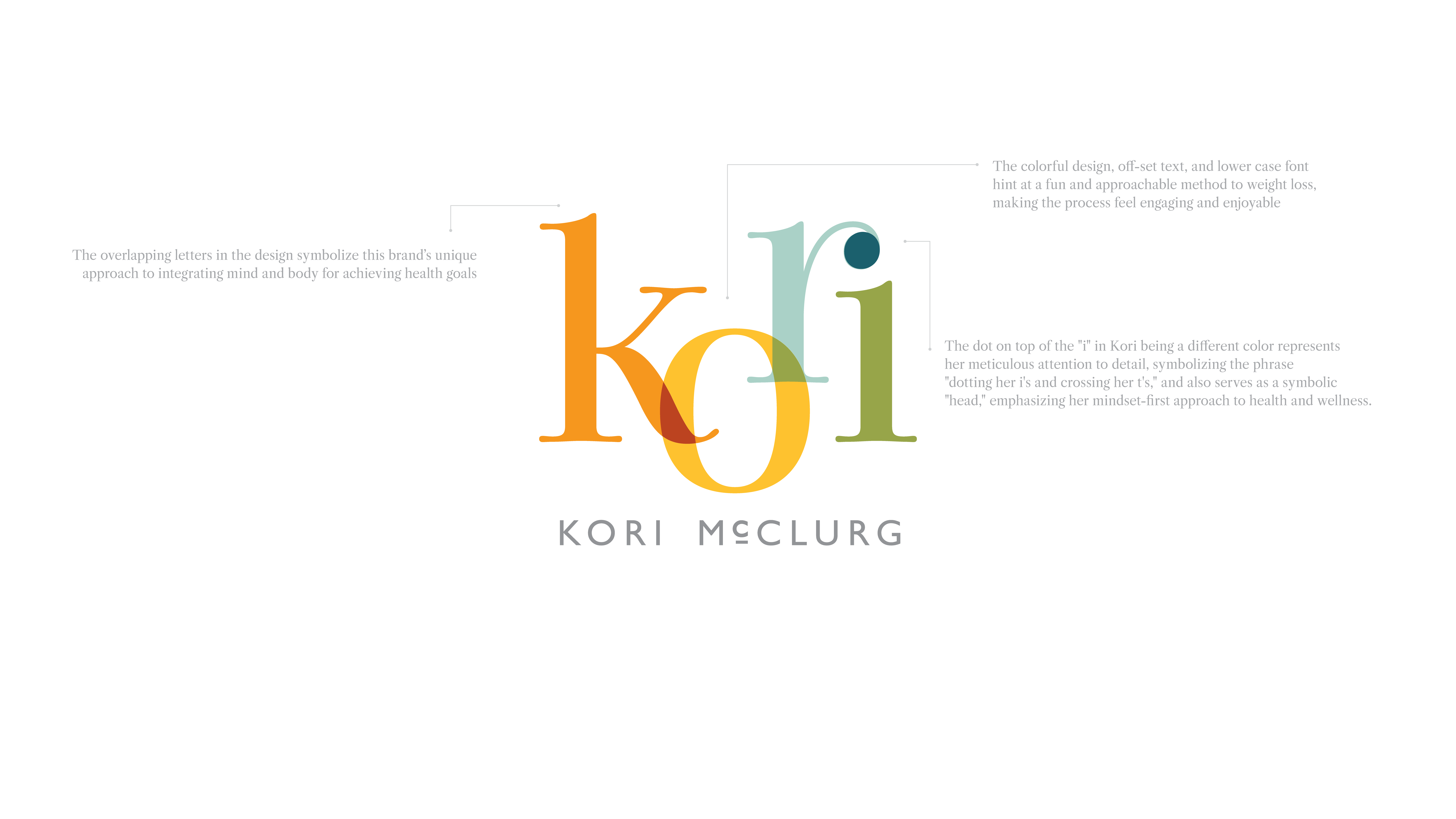
The Monogram: Symbolism That Communicates Without Words
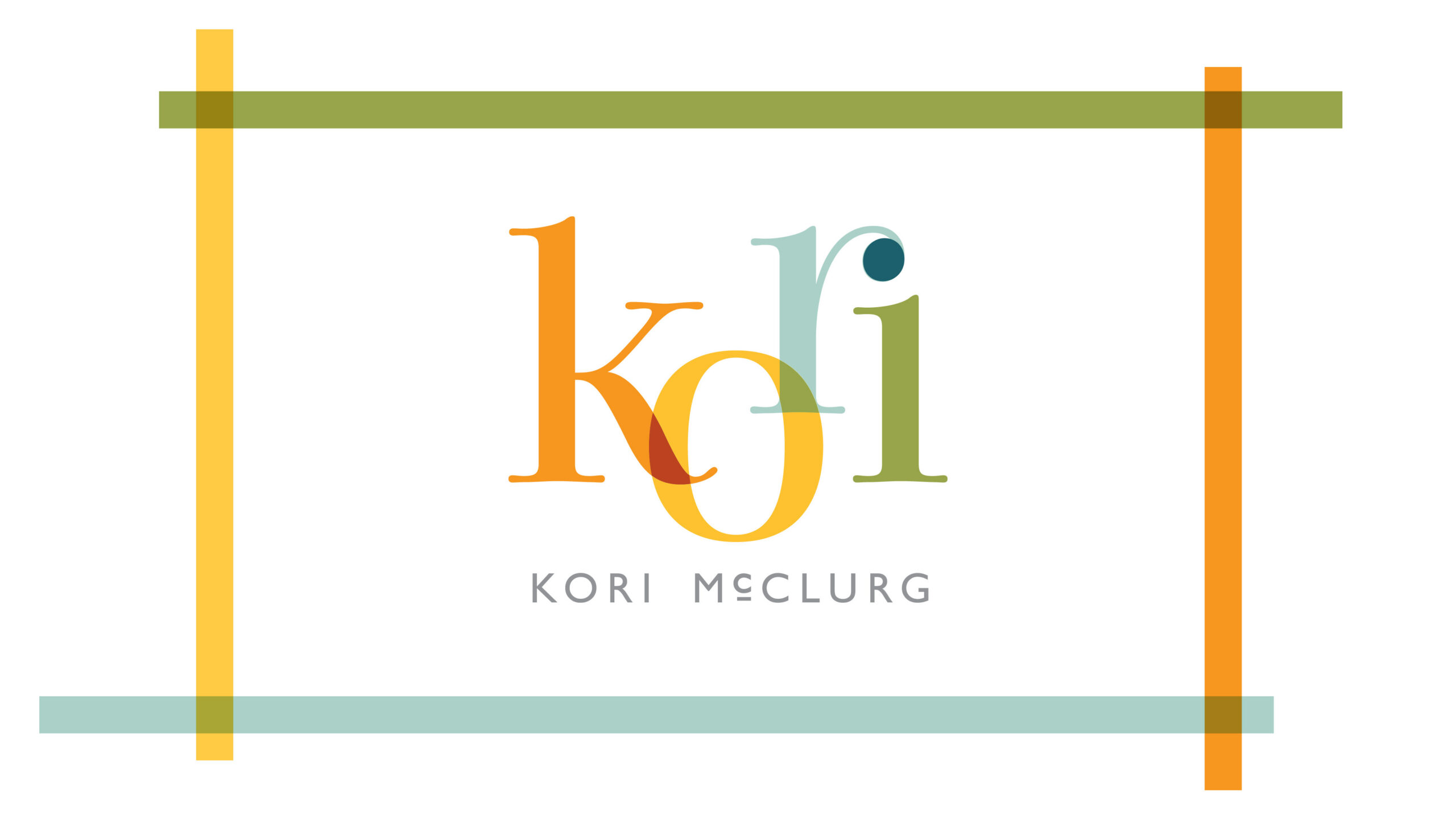
Her overlapping KC letters represented the integration of mind and body—central to her methodology.
Rather than functioning as decorative typography, the monogram visually communicated her approach before she even spoke.

The “i” Dot: Mindset as a Visual Cue
Even the dot above the “i” in Kori was intentional. Not only did it symbolize meticulous attention to detail, but it also subtly represented the head—reinforcing her mindset-first approach to wellness.
This is what luxury brand strategy does.
It communicates layers of meaning invisibly.
Color Psychology as Strategic Messaging
Each color was chosen strategically:
- Orange for energy and vitality
- Yellow for optimism and clarity
- Green for renewal and growth
- Blue for trust and credibility
As a result, her visual identity conveyed vibrancy without sacrificing authority.
And when your visuals align with your message, you eliminate friction.
Business #1: Launching Under a Strong Luxury Brand Strategy
Within six months of completing her luxury brand strategy, Kori launched her first business under the Kori McClurg umbrella.
Notice what did not happen:
- There was no identity crisis.
- There was no second-guessing.
- There was no aesthetic overhaul.
Instead, the infrastructure supported expansion.
Because luxury brand strategy isn’t about a single launch.
It’s about scalable positioning.
Podcast Launch: Expansion Without Reinvention
Next came the podcast.
Here’s what most entrepreneurs do when launching a podcast:
They reinvent.
New graphics, messaging and new tone.
However, when your luxury brand strategy is cohesive, expansion feels calm rather than chaotic.
The podcast inherited:
- The same authority
- The same typography
- The same color psychology
- The same strategic positioning
As a result, launching required execution—not reinvention.
That distinction alone saved months.

Acquiring a Second Business: Eat Your Own Way
Why Most Founders Fracture During Acquisition
At this point, many entrepreneurs would pause.
Yet, Kori did something bolder.
She acquired a second business and rebranded it as Eat Your Own Way.
Acquisitions often expose weak foundations. Without a strong luxury brand strategy, adding another entity creates confusion.
Fortunately, her personal brand was already positioned as the authority umbrella.
Therefore:
- Eat Your Own Way didn’t compete with her identity.
- It extended it.
- It strengthened her ecosystem.
You don’t acquire confidently when your positioning feels shaky.
Instead, you acquire when your brand foundation feels solid.
That confidence came directly from strategy.

Publishing the Book: Authority as a Natural Extension
Interestingly, the book wasn’t step one.
It was a milestone.
By the time the manuscript materialized, the luxury brand strategy had already:
- Clarified messaging
- Established authority
- Unified visuals
- Created audience trust
Consequently, publishing felt aligned rather than risky.
This is where many entrepreneurs misunderstand momentum.
They assume speed comes from rushing.
In reality, speed comes from removing friction.
And friction disappears when luxury brand strategy is done correctly.

The Invisible Work Behind a Luxury Brand Strategy
From the outside, this twelve-month transformation appears ambitious.
Behind the scenes, it required depth.
Extensive positioning worksheets. Strategic refinement. Uncomfortable clarity.
Luxury brand strategy demands introspection.
However, that depth is precisely what creates leverage.
Without it, you move slowly.
With it, expansion becomes inevitable.
Why a Luxury Brand Strategy Makes Growth Inevitable
Let’s recap.
In twelve months, Kori:
- Built her personal brand
- Launched her first business
- Launched a podcast
- Acquired and rebranded a second business
- Published a book
That is not hustle.
That is architecture.
Luxury brand strategy created:
- Clarity
- Authority
- Scalability
- Decision-making ease
- Market differentiation
And when those elements align, momentum compounds.
How to Know If You Need a Luxury Brand Strategy
If you resonate with any of the following, it may be time:
- You’re constantly tweaking your website.
- Your messaging feels scattered.
- Every launch feels like starting over.
- Expansion feels overwhelming rather than exciting.
- You hesitate to position yourself boldly.
Luxury brand strategy eliminates those bottlenecks.
It transforms uncertainty into alignment.
And alignment accelerates everything.
What a Complimentary Luxury Brand Audit Looks Like
This one-on-one strategic call includes:
- A deep dive into your current positioning
- Identification of structural gaps
- Clarity around scalability
- Strategic direction for expansion
Rather than selling you a template or a surface-level fix, we examine what’s actually slowing you down.
Because sometimes, what feels like a productivity issue is really a positioning issue.
Final Thoughts: Leverage Over Hustle
Ultimately, Kori didn’t build four major assets in twelve months because she worked harder.
She built them because she built correctly.
Luxury brand strategy made that year inevitable.
And while your timeline may differ, the principle remains constant:
When clarity comes first, momentum follows.
Let’s architect something that scales.
Save for later—Pin This Post!